


Hunter's Haven
4.283.00 Reviews
App Specs
- Version
- 0.12.1
- Updated On
- License
- Free
- Downloads
- 10,000+
- Developer
- Gamincat
- Categories
- Adventure
- Platform
- Android
Screenshots
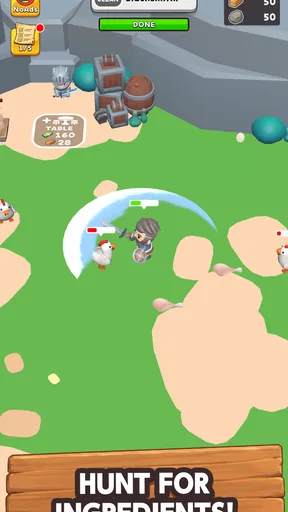

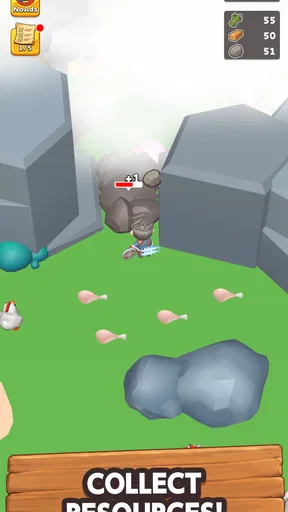
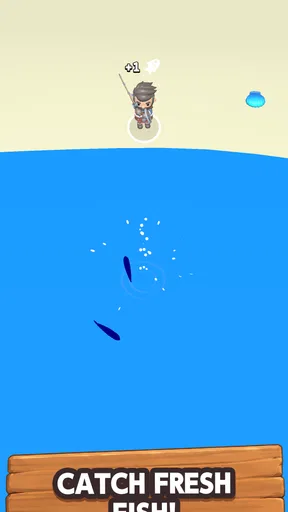
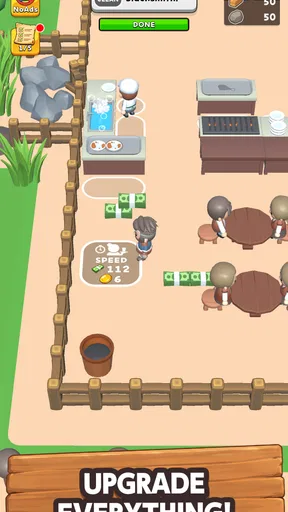
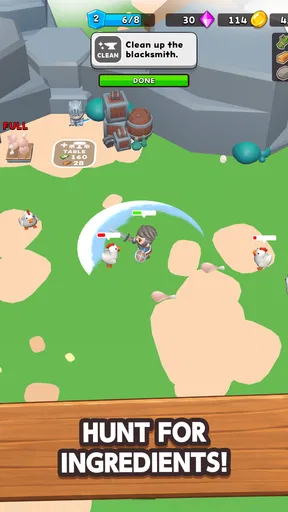
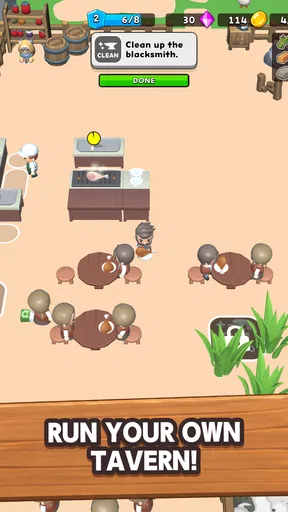
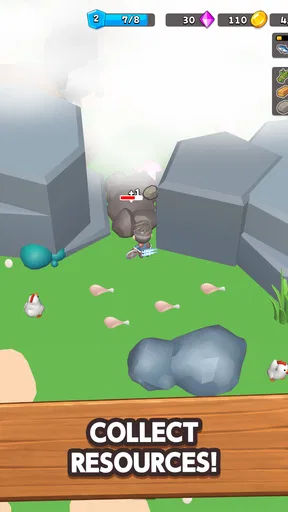
 Analysis by AppCompare
Hunter's Haven is the kind of adventure game I open when I want a compact survival challenge rather than a long, story-heavy journey. Its central idea is easy to understand: track dangerous creatures, collect unusual materials, and try to remain alive through each outing. That simple loop gives the game a clear identity, but it also means the experience depends heavily on whether you enjoy repeating risky hunts and making careful choices with limited resources.
After spending time with it, my overall view is positive but measured. Gamincat has made a free game that is approachable enough for casual players while still asking you to pay attention once a hunt becomes difficult. It is not the best choice for someone looking for a deep role-playing adventure, a large social world, or a relaxed collecting game. For players who like short sessions built around preparation, danger, and gradual improvement, however, it has a pleasant pull.
Hunting and survival form a focused gameplay loop
The strongest part of Hunter's Haven is the relationship between its three basic activities. Hunting gives you a reason to move forward, gathering rare materials makes each successful trip feel worthwhile, and survival determines whether your preparation was good enough. None of those elements needs a complicated explanation, which makes the game easy to pick up, especially if you are new to adventure games on mobile.
I like that the goal is not simply to defeat everything in front of me. A hunt becomes a judgment call. Do I continue because the target seems manageable, or do I leave while I still have something to show for the trip? That tension is more interesting than a routine sequence of fights because it makes retreat a sensible decision rather than an obvious failure.
The material-gathering side also gives ordinary exploration a purpose. Rare items are not just decoration in the overall loop; they represent the reward for taking a chance. This creates a useful contrast between safe progress and ambitious progress. If I play cautiously, I can protect what I have already earned. If I push farther, I may come away with something more valuable, but I also expose the entire outing to a bad result.
That trade-off is one of the game’s most effective design choices. It gives even a short session a beginning, middle, and end. I start by deciding what kind of risk I am willing to accept, spend the middle of the session responding to threats and opportunities, then finish by judging whether the reward justified the danger. Many mobile games blur these stages together, while this one benefits from keeping them recognizable.
Why the material hunt matters more than it first appears
A generic description of the game might make the gathering system sound like a simple side activity. In practice, it is the part that encourages me to think ahead. When a material is described as rare, I do not treat it like an item to collect automatically. I think about whether the current run is already successful, whether I can afford another confrontation, and whether a small gain is worth risking everything I have carried so far.
Worth Reading Before You Choose

Flipboard Shows What News Apps Must Do Beyond the Feed

Switching to Android Auto Means Rethinking Your Driving Routine

Google Calendar Makes a Crowded Week Easier to Manage

Ludo King Makes the Most of the Minutes Between Plans

Baby Panda World Brings Quick Play to Modern Phones, but Its Game Library Feels Busy

ESPN’s Live Game View Makes Following Close Games Easier
My practical advice is to avoid treating every visible opportunity as mandatory. The best run is not always the one with the largest haul. Sometimes the smarter outcome is to secure a modest collection and stop before impatience turns a good attempt into a wasted one. That mindset is especially useful for new players, who may otherwise keep advancing simply because the next reward is close.
This also makes the game suitable for short breaks. I can begin a session with one clear objective, such as looking for a particular kind of material or testing how far I can safely travel, rather than needing a large block of free time. It works well on a commute, during a waiting period, or at the end of the day when I want something interactive but not overwhelming.
Difficulty comes from decisions, not from a huge amount of content
The challenge feels most convincing when it comes from deciding how much danger to accept. I do not need a massive map or a complicated character sheet to feel pressure. The possibility of losing the value of a hunt is enough to make ordinary encounters matter. That is a good fit for players who prefer clear choices over layers of menus.
At the same time, this focused design has a limit. If you need a constantly expanding adventure with many distinct systems, the loop may begin to feel narrow. The game’s appeal comes from refining your approach to hunting and survival, not from presenting a different type of activity every few minutes. I found that satisfying in short sessions, but I can understand why a player seeking variety might eventually want something broader.
One useful way to play is to separate learning runs from reward runs. On a learning run, I pay attention to how threats behave and how much risk I can handle, without expecting a perfect haul. On a reward run, I use that knowledge more conservatively and focus on bringing valuable materials back safely. This two-stage approach reduces frustration and makes each attempt feel informative, even when it does not end with the result I wanted.
What works well in everyday play
The game’s accessibility is a genuine strength. It is free to play, carries an Everyone content rating, and supports devices using Android 9 or later. Those details make it easy to recommend as a low-commitment download for a broad audience. I would still remind younger players that optional purchases are present, but the basic invitation is straightforward: install it, learn the hunting loop, and decide whether the style suits you.
Its current version is 0.12.1, and the relatively compact version number matches my impression that this is a focused experience rather than a giant established platform. I approach it as a game to enjoy for its central loop, not as a promise of an enormous amount of content. That expectation matters. When I judge it on clarity and moment-to-moment decision-making, it performs better than when I imagine it competing with the biggest adventure games on mobile.
The public response is encouraging without making the game look universally loved. It holds a 4.2 average from around 354 ratings, with roughly 82 written reviews, and has passed 10 thousand installs. I read that as a sign of a small but interested audience rather than proof that it will satisfy everyone. The numbers suggest enough players have found value in it, while the scale also reminds me that this is not a mainstream giant with an enormous community behind it.
That smaller footprint can be an advantage for someone who wants to try something less familiar. I often find that compact games are easier to appreciate on their own terms because I am not comparing every screen with a major blockbuster. Here, the pleasure comes from the hunt itself and from learning when to stop. The game does not need to pretend to be something much larger to justify a place on my phone.
A realistic session from start to finish
Imagine having fifteen minutes before an appointment. I would begin by choosing a modest objective instead of trying to complete the most ambitious hunt available. During the outing, I would gather what seems safely reachable, watch for signs that the situation is becoming unfavorable, and keep the value already collected in mind. If a rare material appears late in the run, I would ask whether it is worth exposing the entire haul to one more risky encounter.
That scenario captures where the game fits best. It gives me enough structure to feel engaged, but it does not require the kind of uninterrupted attention demanded by a large narrative adventure. A successful session can be measured by a sensible decision, not only by defeating a major opponent. For me, that makes it a better companion for brief, repeatable play than for a single marathon sitting.
There is also a useful mental shift involved. I do not judge an outing only by what I collected. I judge it by whether I learned something about the route, the danger, or my own tolerance for risk. That approach makes failure less irritating and helps the game retain value after the novelty of the first hunts fades.
The friction points I would want players to understand
The main weakness is repetition. Because the experience is built around hunting, gathering, and surviving, players who need frequent changes of pace may find the structure predictable. The loop is clean, but it is also exposed: once you understand its rhythm, there are fewer distractions to hide whether you are enjoying it.
I also think the game asks for patience. Progress is more satisfying when I accept that not every attempt should produce a major reward. A player who expects constant upgrades or immediate access to the best materials may find the survival element frustrating. The game’s tension depends on restraint, and restraint is not enjoyable for everyone.
The free-to-play model deserves a careful look as well. Optional in-app purchases range from $4.99 to $7.49 per item. That does not automatically make the game unsuitable, but it does mean I would approach spending cautiously. I recommend playing long enough to understand the ordinary rhythm before buying anything. If the core hunt already feels repetitive without assistance, a purchase is unlikely to solve the underlying problem.
Another limitation is that the game’s accessibility can work against its depth. The basic premise is easy to grasp, but players who want elaborate character development, a large narrative, or a wide range of play styles may not find enough complexity here. I would choose a more expansive adventure title for a long weekend of exploration. I would choose this one when I want a contained challenge that I can return to without relearning a complicated system.
Who should skip it
I would skip Hunter's Haven if my priority were a story-first experience with memorable dialogue and cinematic progression. The hunting and survival focus leaves less room for that kind of adventure. I would also look elsewhere if I wanted a highly competitive multiplayer game, a purely relaxing collection experience, or a title that could be played almost mindlessly while watching something else.
Players who dislike losing progress or abandoning a promising run should think carefully before installing it. The emotional appeal comes partly from knowing that greed can hurt. If that pressure sounds irritating rather than exciting, the same design that makes the game engaging for me may make it unpleasant for you.
It is also not the ideal recommendation for someone who wants a huge amount of content immediately. The game’s identity is concentrated around its main loop. That is a strength when the loop clicks, but it means the title should be approached as a specialized adventure game, not as an all-purpose replacement for every other mobile genre.
Who gets the most from the game
I think the best audience is made up of players who enjoy making small tactical decisions under pressure. You do not need to be an expert gamer, and the Everyone rating makes the premise broadly approachable, but you do need to appreciate the difference between a safe reward and a tempting risk. Someone who enjoys replaying a compact challenge to improve their judgment will likely get more from it than someone who needs a new objective every session.
It is particularly well suited to people who like adventure games but do not always have time for a long quest. The structure lets me play in short bursts while still giving each attempt a meaningful purpose. The game also works for players who enjoy collecting, provided they are comfortable with the possibility that the search for a rare material can become dangerous.
For a friend deciding whether to try it, I would phrase the recommendation this way: download it if the idea of choosing when to turn back sounds fun. That single question captures the game better than its genre label. If the answer is yes, the simple systems may become pleasantly absorbing. If the answer is no, the game’s central tension may feel like an obstacle rather than a reward.
Before spending money, I would use a simple test. Play several ordinary hunts, notice whether you are thinking about your next decision between sessions, and check whether failure teaches you something useful. If you are already enjoying the basic loop, optional purchases are easier to evaluate on their own terms. If you are bored before that point, keep your money and move on to a different adventure game.
My final recommendation
Hunter's Haven succeeds because it keeps its promise narrow and understandable. Gamincat has built an adventure game around the pleasure of finding valuable materials while knowing that survival may require walking away. That creates a satisfying rhythm of preparation, risk, and return, especially in short sessions.
Its limitations are just as clear. The loop can become repetitive, the survival pressure will not appeal to everyone, and the optional purchases mean cautious players should avoid rushing into spending. It also cannot replace a large role-playing adventure for people who want extensive stories, broad exploration, or many unrelated activities.
Still, I would recommend giving it a try if you want a free, approachable mobile game with a focused challenge. The best way to enjoy it is to treat every hunt as a decision-making exercise rather than a race for maximum rewards. Go in with modest goals, learn from unsuccessful outings, and leave while the run is still in your favor. For the right player, that restraint is exactly what makes this small adventure worth returning to.
Pros
- Simple controls make the core hunting gameplay easy to pick up.
- Varied wildlife encounters keep missions from feeling repetitive.
- Short sessions suit quick play on mobile devices.
- Progression rewards regular play and encourages continued exploration.
- Atmospheric environments create an immersive outdoor setting.
Cons
- Some missions may feel repetitive after extended play.
- Progress can become slower without frequent upgrades.
- Touch controls can feel imprecise during fast encounters.
- The game may require substantial storage on older devices.
- Performance and loading times can vary across mobile hardware.
FAQs for Hunter's Haven
What is Hunter's Haven, and what can I do in the app?
Hunter's Haven is designed as a hunting-focused mobile experience where players can explore outdoor environments, track targets, complete hunting challenges, and improve their equipment or skills. Depending on the version available for your device, gameplay may include missions, progression systems, different locations, and collectible rewards. Before downloading, check the store description to confirm the current features and supported game modes.
Is Hunter's Haven free to download and play?
Hunter's Haven may be available as a free download, but users should review the app store listing carefully because free games can include optional in-app purchases, advertisements, or premium upgrades. These purchases may unlock equipment, additional content, cosmetic items, or faster progression. If children will use the app, it is recommended to enable parental controls and require authorization for every purchase.
Does Hunter's Haven require an internet connection?
The connection requirements can vary depending on the features included in the installed version of Hunter's Haven. Basic hunting activities may work offline, while advertisements, cloud saves, online events, leaderboards, updates, or multiplayer functions may require Wi-Fi or mobile data. If playing while traveling, test the game without a connection first so you know which features remain available offline.
Is Hunter's Haven suitable for children and sensitive players?
Hunter's Haven is centered on hunting, so it may include weapons, animal tracking, shooting mechanics, or realistic outdoor scenes. Parents should check the official age rating and preview the store screenshots before allowing younger players to download it. The level of realism, violence, and advertising can differ between versions, platforms, and updates, making the rating and privacy information important to review.
What devices are compatible with Hunter's Haven, and how much storage does it need?
Compatibility depends on the Android or iOS version, device hardware, and the specific release published by the developer. A newer phone or tablet will generally provide smoother graphics and shorter loading times, while older devices may experience reduced performance. Check the official download page for the minimum operating-system requirements and leave additional free storage for updates, cached files, and downloadable game content.


